
Fantamon: Idle RPG
Shengqu GamesAdventure
4.1208.00 Reviews
- Version
- 1.41
- Installs
- 100.00K
- Age Rating
- Everyone 10+
Screenshots


Our Review of Fantamon: Idle RPG
 Analysis by Appyee
Fantamon: Idle RPG is an adventure game from Shengqu Games that takes a low-pressure approach to collecting, team building, and progression. I found its appeal in the way it fits around short visits rather than demanding a long uninterrupted session. You can check in, make a few decisions, improve your group, and leave without feeling that the game has wasted your time.
That convenience also defines its limits. This is not the kind of adventure I would choose when I want precise controls, a large world to explore manually, or a story that carries every minute of the experience. It is better suited to players who enjoy watching a team develop and making occasional choices about how to improve it. The free entry point makes it easy to test, but the presence of optional purchases means the value depends heavily on how comfortably you play without spending.
How the free entry point shapes the experience
The game is free to download, which is the clearest reason to give it a try. There is no purchase required before you can decide whether its idle rhythm suits you. That matters here because the central question is not whether the game looks attractive for a few minutes, but whether you enjoy returning to a progression loop that continues between active sessions.
Optional in-app purchases range from $0.49 to $99.99 per item. I would treat that range as a reason to set a personal limit before playing, rather than as an instruction to spend. The free version is the sensible starting point: use it long enough to understand how much progress comes from ordinary play, then decide whether any purchase solves a problem you actually have.
That distinction is important. A free game can offer plenty of entertainment without offering every convenience at no cost. In my experience, the right way to judge this title is by asking whether the unpaid routine remains enjoyable, not by assuming that every available upgrade is necessary. If you dislike games that place paid options near progression decisions, you may find the commercial layer distracting even if you never buy anything.
The age guidance is Everyone 10+, so it is positioned for a broad audience rather than adults only. I would still look at the purchase settings before handing the device to a younger player. The game is free to start, but the available item range makes it worth treating spending controls as part of the setup, especially on a shared phone or tablet.
There are also practical compatibility details to consider. It runs on Android 7.0 or later, and the current version is 1.41. That makes it accessible to many older Android devices, although compatibility on paper does not guarantee that every phone will feel equally smooth. Idle games are often checked repeatedly throughout the day, so a device that handles quick launches and ordinary menus comfortably will make a noticeable difference.
What you are really paying for, if you choose to spend
I would not describe the purchases as buying the whole game. They are better understood as optional ways to change the pace or convenience of progression. That can be worthwhile for someone who already enjoys the routine and wants to support it, but it is a poor reason to install the game in the first place. If the basic loop does not hold your attention, a paid item is unlikely to fix that.
The broad price range also means that “free-to-play” does not tell you everything about value. A small purchase and the highest listed item represent very different decisions. I would begin with no spending, identify the parts of the routine I genuinely enjoy, and only then consider whether a modest purchase improves those parts. I would avoid spending simply because a reward arrives slowly or because a limited-looking offer creates pressure.
For families, the most useful habit is to make the cost boundary explicit. Decide whether the game is strictly free, whether a small occasional purchase is acceptable, or whether purchases should be blocked entirely. That choice is easier before the first tempting offer appears. The game can still be evaluated fairly under any of those approaches.
What the adventure loop delivers
The strongest part of the experience is its suitability for fragmented time. I can imagine opening it during a short break, collecting what has accumulated, checking the team, and making one or two adjustments before returning to something else. That is a different kind of engagement from a conventional adventure game, where stopping in the middle of an encounter or exploration route can feel inconvenient.
Its team-focused format gives those brief visits a little more purpose than simply collecting a timer reward. The interesting question becomes what to improve and when, rather than whether I have enough time to play. That makes the game a reasonable companion for commutes, waiting rooms, or the few minutes before bed, provided you are comfortable with gradual progress instead of constant action.
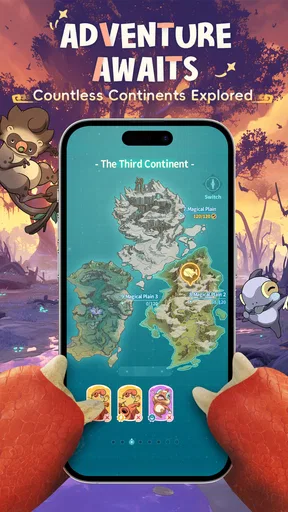
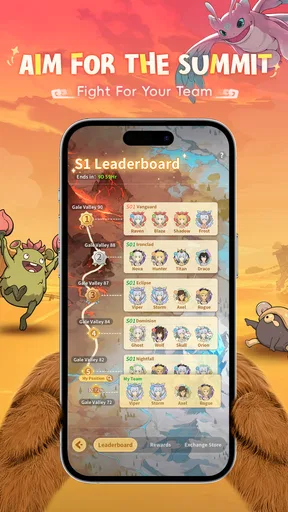
The worldwide team emphasis also gives the game a social direction. I would approach that as an added reason to compare progress and participate with other players, not as a guarantee that every session will feel deeply cooperative. Players looking for a strongly social adventure should pay attention to how much interaction they actually enjoy, because an idle structure can make community features feel secondary to personal progression.
The cute presentation helps keep the tone approachable. It makes the game easier to recommend to someone who wants an adventure without a grim atmosphere or an intimidating interface. Still, a friendly visual style should not be confused with unlimited simplicity. Team decisions can become meaningful once there are several possible improvements competing for attention, and that is where the game asks for more thought than its relaxed pace initially suggests.
Three ways I would play more intelligently
First, I would avoid spending every available reward immediately. In an idle progression game, the best short-term improvement is not always the best use of resources over several return visits. I would let the team’s current weakness become clear, then invest in the area that removes the biggest obstacle rather than spreading small upgrades everywhere. This creates a clearer sense of cause and effect and reduces the feeling that progress is random.
Second, I would use the game as a check-in routine instead of leaving it open constantly. Repeatedly watching a progress screen can make any idle game feel slower, while a few deliberate visits make accumulated rewards feel more meaningful. A simple schedule—morning, a spare moment during the day, and evening—would suit the design better than treating it like an action game.
Third, I would separate experimentation from commitment. When a new team option becomes available, I would test it during ordinary play before using purchases to accelerate it. That avoids paying to support a strategy I have not yet learned to enjoy. It also makes the free portion a proper trial rather than a waiting room before the store becomes central.
These habits are not flashy tricks, but they address the main challenge of the format: idle games can turn decision-making into automatic tapping if you do not give each visit a purpose. Fantamon: Idle RPG is more satisfying when I decide what I am checking and why, rather than collecting everything by reflex.
Where the game feels less convincing
The relaxed structure can become repetitive. If your favorite part of an adventure game is direct control, timing, exploration, or solving situations through quick reactions, this may feel too passive. The game asks you to care about the growth of a team, but it does not replace the excitement of personally navigating a dangerous place.
There is also a trade-off between convenience and involvement. Automatic progress is excellent when I am busy, but it can make victories feel less personal than they would in a hands-on role-playing game. The more of the experience happens while I am away, the more important the planning layer becomes. If the team choices do not interest you, there may not be enough active play to compensate.
The purchase range creates another point of friction. I appreciate being able to start for free, but I would be cautious about judging the game by the most expensive option or assuming that buying something is the normal route. Players who are sensitive to upgrade prompts may prefer a fully paid adventure with a fixed cost, even if that alternative offers fewer ongoing check-ins.
There is a difference between a game being easy to visit and being easy to master. The first is one of this title’s strengths; the second depends on how much depth you find in its team decisions. Some players will enjoy gradually learning which improvements matter. Others may conclude that the routine asks for attention without giving enough control in return. Neither reaction is unreasonable.
Who is most likely to get good value
I would recommend it first to players who enjoy character or creature collection, light team planning, and progress that continues while they are doing other things. It is particularly suitable for someone who wants an adventure game that does not punish them for putting the phone down. The free download gives that audience a low-risk way to test the rhythm.
It can also work well for a busy player who wants a small daily habit. Imagine checking it during a lunch break: you collect the latest progress, notice that one part of the team is falling behind, make a focused improvement, and close the app. Later, you return to see whether that decision changed the next stretch of progress. That is a realistic use case, and it shows the game at its best—compact, repeatable, and easy to fit around a schedule.
Newer players may appreciate the approachable tone and the fact that they do not need to commit to a long session. The broad age guidance supports that accessibility, though younger users should still play with purchase controls in place. The game is also a reasonable choice for someone curious about idle RPGs but unwilling to pay before understanding the format.
I would be more selective for competitive players. If your enjoyment depends on precise balance, constant tactical input, or proving skill through direct performance, the idle structure may not provide the kind of satisfaction you want. Likewise, players who prefer a finished, self-contained story should look toward a traditional adventure RPG instead of expecting this one to deliver the same narrative focus.
It is not the right choice for someone who wants to avoid all optional purchase prompts. Even when you spend nothing, the existence of items priced from $0.49 to $99.99 can affect how the experience feels. A completely paid game with no store layer may be a better fit for a player who values a clean, fixed-cost design above free access.
On the other hand, if you are comfortable ignoring offers and enjoy gradual team development, the free model can be useful rather than restrictive. You can decide based on your own routine, not on the assumption that a purchase is required. That is the fairest way to assess its value.
My verdict after weighing the trade-offs
Fantamon: Idle RPG earns its place as a casual adventure option because it respects short sessions and gives team progression a purpose. Shengqu Games has aimed at players who want a friendly, low-pressure game they can revisit throughout the day, and that focus is clear. Its average rating is 4.1 from around 2.3 thousand ratings, while more than 100 thousand installs show that the format has found an audience.
I would install it for free if I wanted a gentle idle RPG to accompany a busy routine. I would spend only after confirming that the unpaid loop remained enjoyable and that a purchase addressed a specific annoyance or added convenience I genuinely valued. The free entry point is a real advantage, but the optional store means the game should be approached with a spending boundary rather than automatic trust.
My recommendation is therefore conditional but positive: try it if you like collecting, gradual improvement, and brief check-ins. Skip it if you need hands-on adventure, a strong fixed story, or a completely store-free experience. For the right player, the best value comes from treating the game as a small daily hobby, not as a race to buy faster progress.
With its Everyone 10+ guidance, Android 7.0 support, and free starting price, it is easy to sample. The real decision is whether the rhythm remains enjoyable after the first novelty fades. If you still look forward to checking the team, planning the next improvement, and seeing what accumulated while you were away, then this is a worthwhile addition to your casual game rotation.
Verdict
Strengths of Fantamon: Idle RPG
- Relaxed idle progression suits short play sessions.
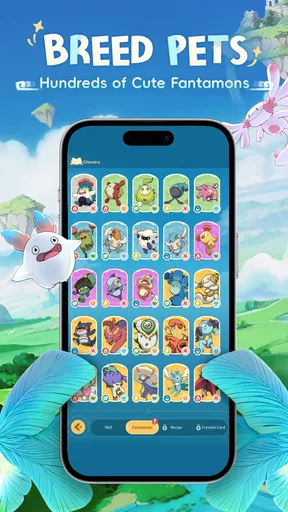
- Stylized monster designs give the roster plenty of personality.
- Team-building encourages experimentation with different creature roles.
- Offline rewards help maintain progress when you cannot play.
- Simple controls make the game approachable for casual RPG players.
Limitations of Fantamon: Idle RPG
- Progress can feel slow without frequent reward collection.
- Duplicate monsters may make roster management feel repetitive.
- Limited control during battles reduces strategic involvement.
- Some upgrades may require considerable resource grinding.
- The interface can feel crowded as more systems unlock.
Similar Picks in This Category
View All
Roblox
Roblox Corporation4.2

Pokémon GO
Niantic, Inc.3.5

Ninja warrior: legend of adven
TOH Games4.6

Ninja Arashi
Black Panther4.6

Eyes - The Horror Game
Fearless Games sp. j.4.5

Critical Action:Gun Strike Ops
FPS Shooter & Action Game4.3
Frequently Asked Questions
What is Fantamon: Idle RPG, and how does its gameplay work?
Fantamon: Idle RPG is a fantasy role-playing game built around idle progression, collectible creatures, and automated battles. You assemble a team of Fantamons, improve their levels and abilities, and let them continue earning rewards while you are away. When you return, you can claim resources, upgrade your squad, equip better items, and make strategic changes before taking on more difficult stages and enemies.
Can I play Fantamon: Idle RPG without spending money?
Yes, Fantamon: Idle RPG can generally be played without making purchases. The game provides progression rewards, currencies, and upgrade materials through regular play, missions, events, and idle earnings. However, optional purchases may help players obtain resources or featured Fantamons more quickly. Free players should expect a slower progression pace and may need to manage resources carefully instead of trying to upgrade every character at once.
Does Fantamon: Idle RPG require an internet connection?
An internet connection is recommended for Fantamon: Idle RPG because idle rewards, account progress, events, advertisements, and certain online features may need to communicate with the game servers. Some basic gameplay may appear to work temporarily while offline, but rewards or progress might not synchronize immediately. To avoid losing updates or missing limited-time content, open the game online regularly and use a stable connection.
Is Fantamon: Idle RPG suitable for children and younger players?
Fantamon: Idle RPG uses colorful fantasy characters and accessible role-playing mechanics, making it easy for many younger players to understand. Nevertheless, parents should review the store rating, privacy information, advertising practices, and in-app purchase settings before installation. Like many free-to-play games, it may encourage repeated play or offer optional purchases, so parental controls are useful if children will play without supervision.
What should I know about progression, team building, and in-app purchases?
Progression in Fantamon: Idle RPG depends on building a balanced team rather than focusing only on one powerful Fantamon. Players should consider roles, abilities, rarity, equipment, and upgrade materials when preparing for tougher content. Because resources can be limited, saving premium currency for valuable events may be worthwhile. In-app purchases are optional, but they can accelerate development, so spending limits are advisable.
Play our best games!


